
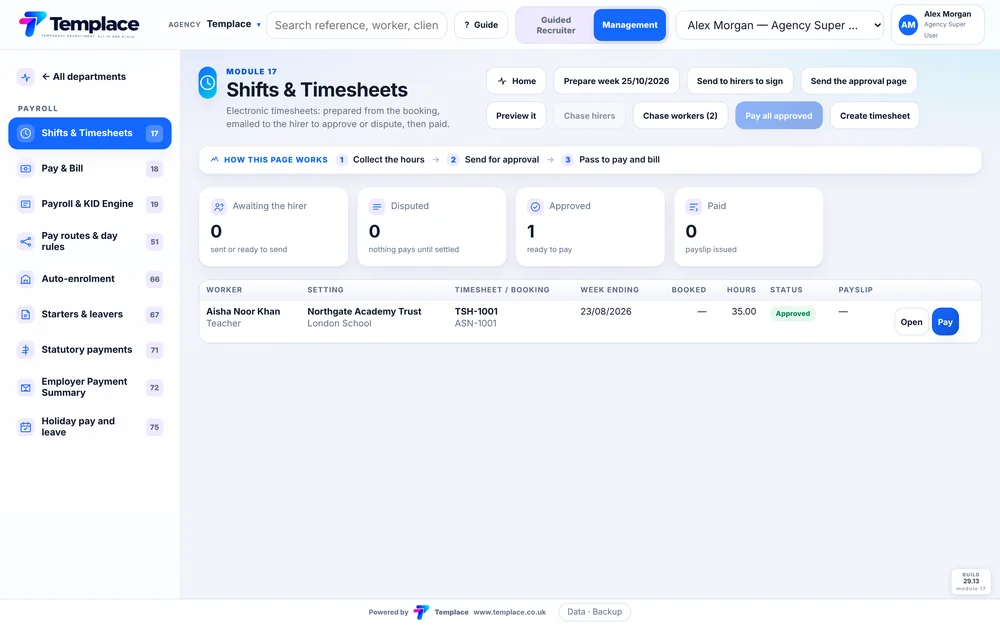
Approved hours in. Correct pay and the right documents out.
Timesheets approved by the hirer feed pay and bill directly, every pay route runs from the same record, and the documents go out before the assignment starts.
The missing timesheet is the one that matters.
Templace knows who was booked, so it knows who has not submitted. Chasing starts from the gap, approval goes to the hirer as a link, and the approved hours are the ones that are paid.
- Days or hours, with the day length set per sector
- Minimum wage checked before approval
- Closed weeks cannot be changed without an audited reopen
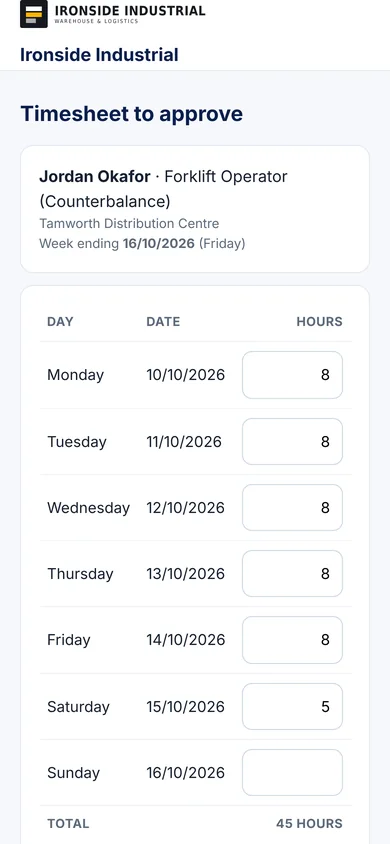
Approve the week from a phone.
The hirer gets a link in the agency’s colours, sees each day, and approves the week. No account, no password, no portal to remember.
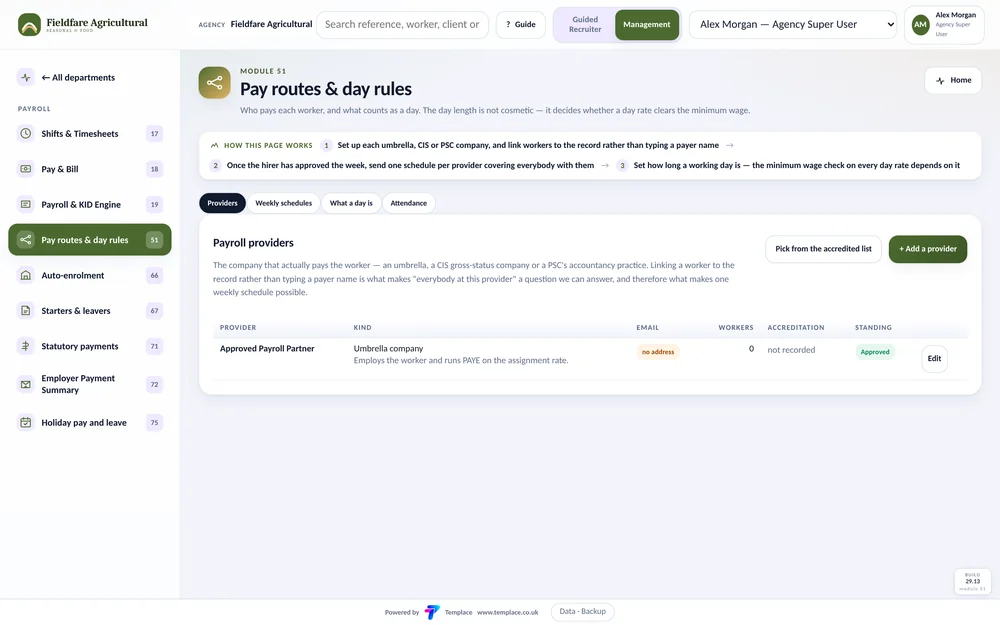
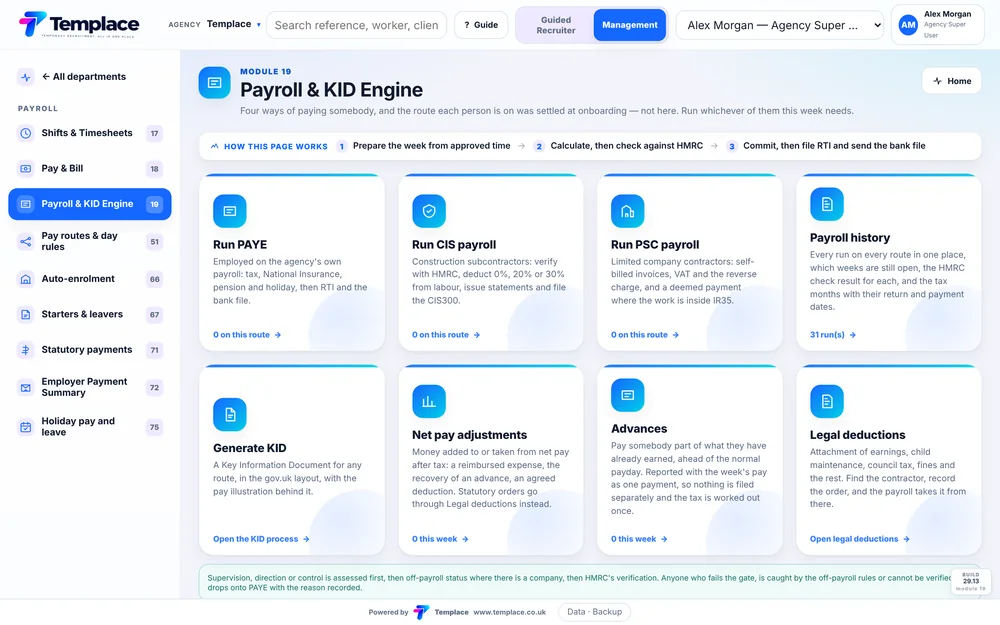
Every way a temp is paid, side by side.
Agency PAYE, umbrella, PEO, CIS and limited company each run from the same assignment and timesheet. Intermediaries are held on an accredited list, and every route has its own KID.
- PAYE with RTI files produced, cumulative tax and the 50% limit
- CIS deductions on labour, never materials, and the CIS300
- Umbrella pay reconciled from the assignment rate to gross
- Limited company self-billing with the reverse charge where due
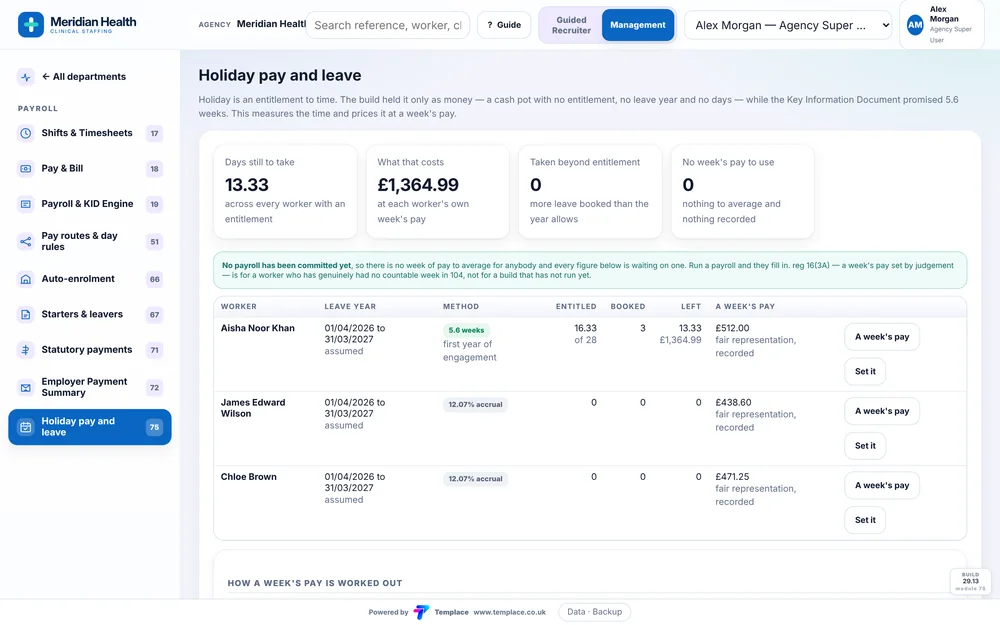
Accrued in hours, paid on the reference period.
Entitlement builds on hours worked; holiday pay looks back over the 52 paid weeks the regulations describe. Bookings that run past what has been earned, or across a closed leave year, are refused with the reason.
- Rolled-up holiday pay only where the law allows it
- A register of entitlement, days taken and pay owed
- Six years of leave records kept, even after a worker asks to be erased
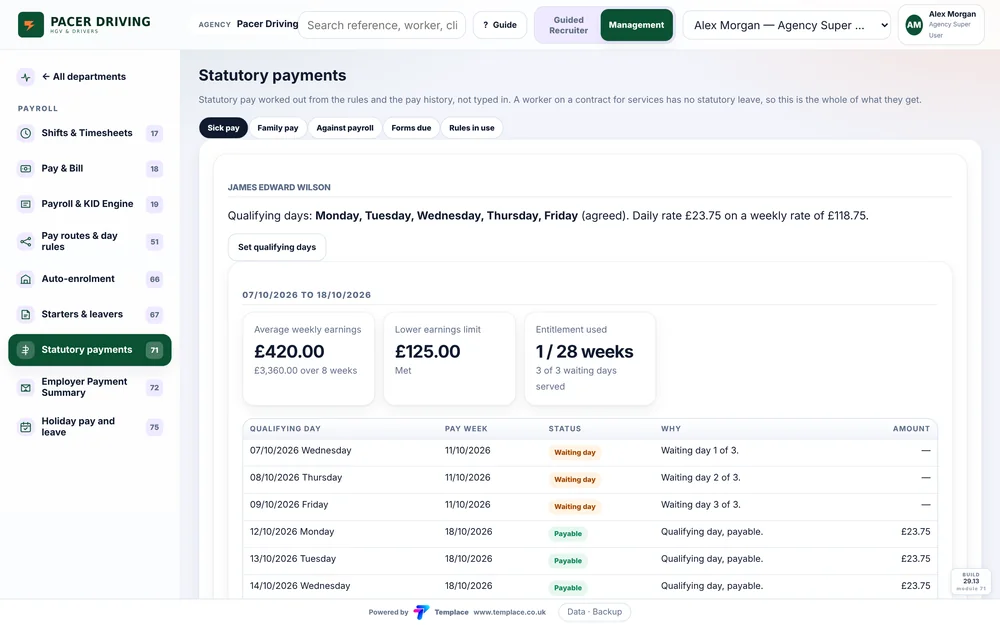
Statutory sick and family pay, with the rule shown.
Eligibility and average weekly earnings come from the pay history already in the system, and each figure carries the rule it used.
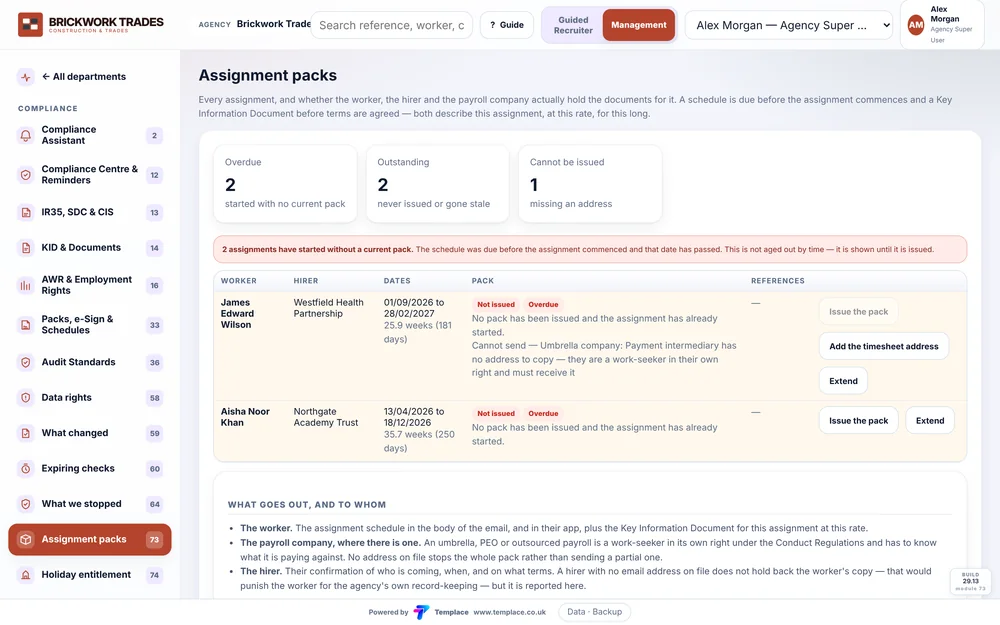
The pack goes out before day one. Every time.
On every assignment — a new placement, an extension or a single day — the schedule, the KID and the terms go to the worker, to the payroll intermediary where there is one, and to the hirer.
- KID built from the assignment’s own rate, hours and duration
- Assignment schedule in the agency’s branding
- Signed electronically, with the time and the evidence kept
A key information document that matches the pay.
The KID follows the government format for each route and is drawn from the same calculation as the payslip, so the illustration and the pay cannot drift apart.
What Templace does not do.
It produces the RTI submission and the CIS300 return and stops there. Filing happens through your own HMRC credentials, because Templace never stores them — there is no Government Gateway password field anywhere in the product. It is a deliberate gap, and it is stated on the screen.
See it with your own agency’s name on it.
A trial runs on sample data in your colours and your logo, so the people who will use it can judge it as theirs. Tell us your sector and how many workers you place in a week.